
 All posts

Aviation technology moved fast in 2025. The year focused on efficiency, automation, lower emissions and a sharper passenger experience. These developments influenced how operators plan routes, manage aircraft and design charter solutions. This round-up outlines the key technologies that shaped 2025 and highlights the trends set to guide private aviation in 2026.

Autonomy and smart flight systems

Autonomous support systems moved from early testing into regular use. Autopilot software improved decision-making by predicting changes in weather, traffic and aircraft performance. This shift reduced repetitive tasks in the cockpit and helped crews maintain a steady workload on long sectors. Auto-takeoff testing continued at selected airports. Automated taxi systems also advanced through new surface-awareness sensors. These updates increased safety margins and positioned autonomy as one of the clearest growth areas for 2026.
AI-driven flight operations and maintenance

AI platforms became central to daily operations. Routing tools processed weather, airspace restrictions and FBO capacity to build efficient flight plans with lower fuel burn. Slot planning tools helped operators secure better timings during peak periods. Predictive maintenance systems analysed engine and component data to pinpoint stress patterns early. This lowered unscheduled downtime and improved on-time performance for popular charter types such as the PC-12, Phenom 300 and King Air lines. Operators reported fewer last-minute aircraft swaps, which supported client experience.
Sustainable fuel and cleaner engines

SAF usage increased across charter and corporate fleets. Average blends moved into double digits, and more airports stocked higher-ratio fuel. Operators reported smoother integration with no operational disruption. New-generation engines launched on models such as the Falcon 6X, Global 8000 and G700. These engines delivered stronger climb rates, lower fuel burn and longer range. Emissions reporting also improved through digital dashboards that displayed estimated CO₂ output per route. This aligned with a rising interest in transparent sustainability data, especially on frequent long-haul flights.
Cabin design, comfort and wellbeing technology
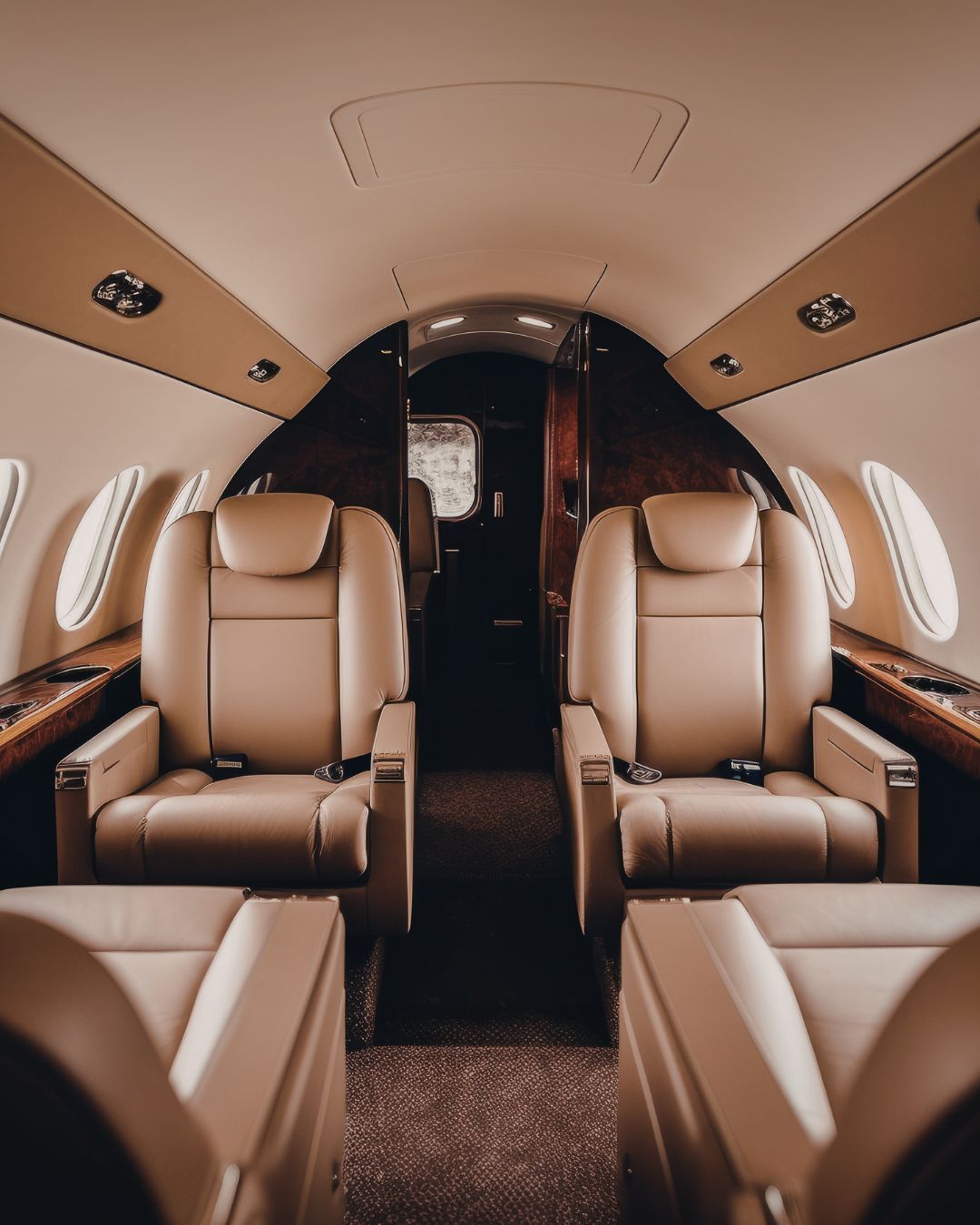
Cabin innovation in 2025 focused on passenger wellbeing. Aircraft interiors adopted humidity-control systems that kept long flights more comfortable and reduced fatigue. Lighting systems gained expanded circadian settings tailored to time zones and route direction. New acoustic materials lowered cabin noise levels, especially during cruise. These features were most visible on aircraft such as the Global 7500, G650ER, G700 and Falcon 10X test platforms. The result was a more productive environment for rest, work or meetings during extended travel.
Urban and regional mobility: eVTOL and next-gen turboprops

eVTOL manufacturers made steady progress toward certification. Their growth encouraged operators to explore new multi-modal travel plans that connect passengers from city hubs to FBOs without road traffic. Airports began planning for vertiport integration. Turboprops also gained traction as cost-efficient options for regional routes. The PC-12 NGX and King Air 360 offered updated avionics, shorter landing distances and simpler pilot workflows. These features suited high-frequency charter routes and remote destinations that jets cannot access.
Security, privacy and cyber-safe operations

Operators strengthened privacy tools in response to higher digital activity on board. Encrypted briefing portals became standard for passenger updates, flight notes and crew communication. FBOs increased biometric access points to reduce manual checks and protect high-value movements. Aircraft connectivity systems gained stronger firewalls and threat-detection layers. This aligned with the broader industry priority of keeping personal and operational data secure while maintaining fast digital services.
What this means for 2026
Aviation in 2026 will focus on smarter automation, stronger digital tools, better fuel efficiency and consistent connectivity. Aircraft selection will be influenced by emissions data, comfort upgrades and long-range capability. Operators will continue investing in AI routing, predictive maintenance and secure communication systems. Passengers will expect smooth digital cabins, fast Wi-Fi and quiet interiors on every flight.
SHY Aviation tracks these developments across charter, aircraft management and planning to support clients with accurate insight and aircraft options that match their travel needs.
Do not hesitate to visit our online quote to obtain a price estimate for your next journey.
Request a quote